NT

Behind the page, a plant grows from a seed, through roots, leaves and branches, into three flowers as you scroll, while the night sky turns to dawn.

I grew brands at P&G, Amazon and TikTok. Now I build products and take them to market.

I’m doing my MBA at MIT Sloan, and it all started in a pharmacology lab at McGill. Scroll down and watch it grow.

McGill→P&G→Amazon Ads→TikTok→MIT Sloan

Email me

Roots in a pharmacology lab

McGill, 2015 to 2019

BSc Honours Pharmacology with First-Class Honours, and captain of the tennis team.

I started in science. During my honours degree I worked on a study in Dr. Claudio Cuello's lab, which looks at how Alzheimer's begins. We studied older adults who had amyloid-beta deposits in the brain but no dementia. They were already declining in perceptual speed, and their brains carried higher levels of inflammatory cytokines, which suggests inflammation shows up early in the disease.

The lab taught me to write the hypothesis down first and to trust the data over the result I hoped for. I still run product tests that way.

Journal of Neuroinflammation · 2021

Cognitive and brain cytokine profile of non-demented individuals with cerebral amyloid-beta deposition

Flores-Aguilar, Iulita, Orciani, Tanna, Yang, Bennett, Cuello.

Read the paper
P&G, where brand management began

Procter & Gamble, 2019 to 2022

Senior Account Executive in Toronto, promoted on the fast track.

Few companies have trained as many Fortune 500 chief executives, and it’s where I learned the fundamentals of building a brand.

The consumer is boss
Start from what the shopper does in the aisle, then decide what the brand should say.
The one-page memo
The idea, why it works and what it needs, on one page. If it doesn't fit, the thinking isn't finished.
Own a P&L early
I ran the P&L for a large customer portfolio, built a multi-year joint business plan, and closed a profit gap.
Win at the shelf
I launched Native deodorant as the category's top innovation, and wrote a Python shelf-layout tool that gave category managers back hours every week.

Amazon Ads and the whole funnel

Amazon Ads, 2022 to 2024

GTM Account Manager in Toronto.

Amazon taught me both ends of the funnel: building a brand before anyone searches for it, and converting the people who already are. Most CPG brands I worked with overspent at the bottom because it was easy to measure, then stalled once they had captured the demand that already existed.

Upper funnel

Build the brand

Helping brands invest in awareness before the demand shows up, and making the case for spend that pays off over quarters, not days. Most of the work was earning the trust of brand teams so they'd try something new.

Lower funnel

Sell the product

Reading the numbers behind a sale, from pricing to conversion to account health, and turning them into a plan a brand team could act on.

Working across markets taught me how much a good playbook has to change from one country to the next.

TikTok, as the app became a store

TikTok Canada, 2024 to 2026

Brand Partnerships Manager, Sales and Product.

I ran consumer goods partnerships, Unilever among them, while TikTok Shop turned a discovery feed into a place to buy.

Taking brands to market

Most of the job was turning a brand’s goals into a plan that works on TikTok: which creators, what content, and how it sells in TikTok Shop. That meant building trust with brand and agency teams, launching partnerships in new markets, and starting programs from scratch. As interim GTM lead, I sorted our accounts into head, torso and tail so each got the right kind of coverage, and coached the junior managers on the team.

Building product

I shipped TikTok's first AI-commerce product for consumer goods, shaped by feedback loops with marketers across North America, and most of them were using it from launch. I ran A/B tests on TikTok Shop conversion with wearable brands, turned the results into a playbook, and cut the features that didn't help. I also built a leadership dashboard that spots the opportunities sitting in our CRM, with an outreach agent that follows up on them.

Learning to build AI products

At MIT Sloan and on my own

Two online games, a party planner, an outreach agent and a startup in progress.

I'm not a trained engineer. I learned by shipping, and each product taught me one more fundamental the hard way.

Infrastructure

Where code runs, and who holds the truth. Fête keeps its API keys on the server, so the browser only talks to the app's own endpoints. Aviary runs its game engine on the server, so no phone ever receives an opponent's hand. Cornerstone does the opposite: every device runs the same rules engine, and Supabase Realtime just relays the moves.

Data and access

Row-level security, rate limits and input checks from the first version. Meravo's architecture isolates each brand's data so one customer can never read another's, and its background workers follow the same rule.

Retrieval (RAG)

A model answers better from evidence than from memory. ShelfScore researches a brand's live channels first and scores only from what it found. Meravo's design keeps a memory of every test a brand has run and pulls the relevant results into each recommendation.

Evals and guardrails

Check the model's work in code. My outreach agent tests every draft against hard rules and sends it back for a fix before a person approves it. Aviary's cards were rebalanced against large batches of simulated bot games after every change.

Unit cost

Moving Fête to Claude Haiku cut the cost of each generation to almost nothing. Meravo's plan tracks AI spend per customer with Langfuse, because gross margin decides whether it's a business.

Product management

Write the problem down before the solution, scope the first version to what the first user needs on day one, and treat trust issues as launch blockers. My pre-launch review of the Sloan Tennis Club app caught hardcoded default passwords before a single member signed in.

Meravo

In development

Entered in the MIT $100K Pitch.

Brands know which creator got the credit. Meravo shows them which one earned it.

Meravo is an experimentation engine for TikTok Shop. It tests each creator and each video for causal lift, so a brand knows which content drove sales. The first product is a creator lift audit. I'm building it with two co-founders, one from the agency side and one from brand management.

Marketing, engineered

Meravo is where I’ve grown into a marketing engineer: someone who can shape the story and also build the system that delivers it. I work on our positioning, messaging and go-to-market plan, then build what makes it run, from AI agents that draft and check outreach to the experiments that show us what’s working.

PositioningGo-to-marketExperimentationAnalyticsAI agentsAutomation

Ask for the deck
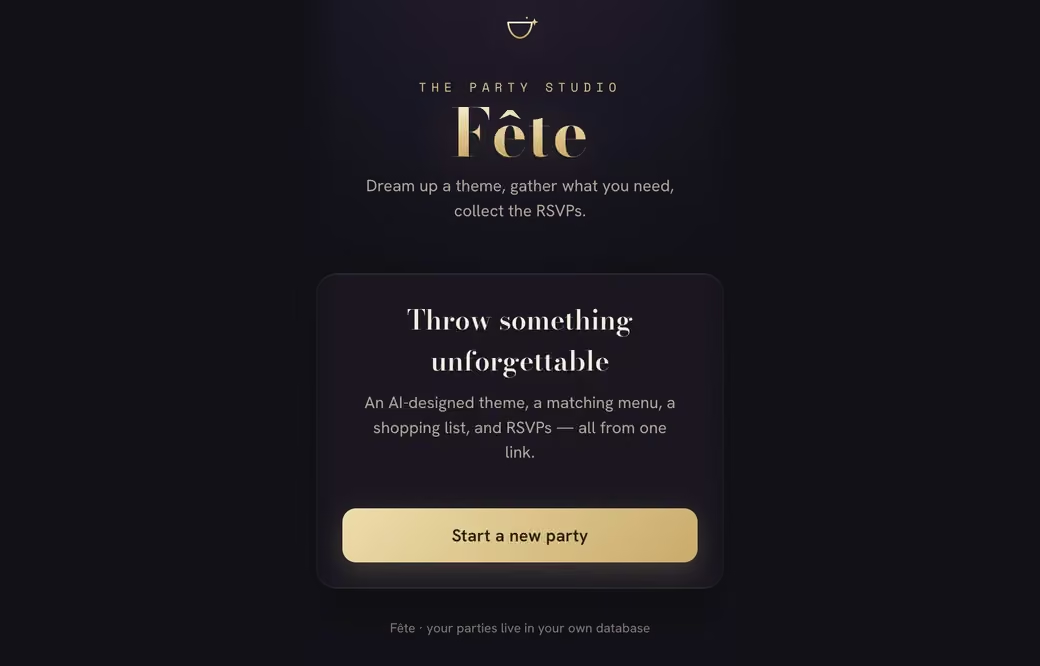
Fête's start screen on a phone: the gold Fête wordmark, the line Throw something unforgettable, and a Start a new party button on a dark plum background

Fête

Live

React, Vercel, Supabase and Claude Haiku.

A party planner that does the hosting admin.

Give it a few details and it drafts a theme and a four-course menu, builds the shopping list, and collects RSVPs from guests on their own phones, with no accounts needed. I took it from a prototype to a deployed full-stack app, and shipped it from an older Intel Mac the Vercel CLI wouldn't run on.

Open Fête
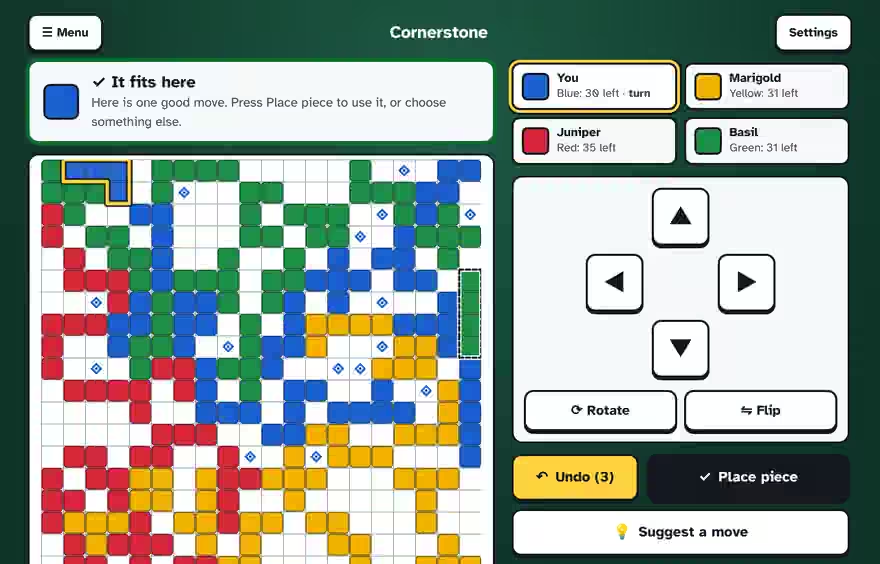
Cornerstone mid-game on a laptop: a square board filling with blue, yellow, red and green pieces, a suggested move outlined in gold, and large arrow buttons beside the board

Cornerstone

Live

A tile game for one to four players.

Built for older players and anyone with low vision.

Inspired by Blokus. My design test was whether someone could play a whole first turn without an explanation. That ruled out auto-zoom and double-tap traps and put every control at thumb size. It installs like an app, works offline for solo play, and puts a dropped player back in their own seat online.

Play Cornerstone

Building something? Write to me.

I’m most curious about how AI will change the way consumer and health products get made, and I’m always up for comparing notes.

LinkedIn ↗ GitHub ↗ Cambridge, Massachusetts

When I’m not building, I’m scuba diving, playing tennis or making cocktails.